
Introduction
In today's fast-paced digital environment, organizations generate and consume vast amounts of information every day. Without a centralized system to organize and access this knowledge, employees and customers often struggle to find the information they need. This is where Knowledge Base Software becomes essential.
A Knowledge Management System helps businesses create, organize, store, and distribute information efficiently. Whether it's internal company procedures, customer support articles, product guides, or technical documents, a well-structured knowledge base ensures information is always accessible.
What Is Knowledge Base Software?
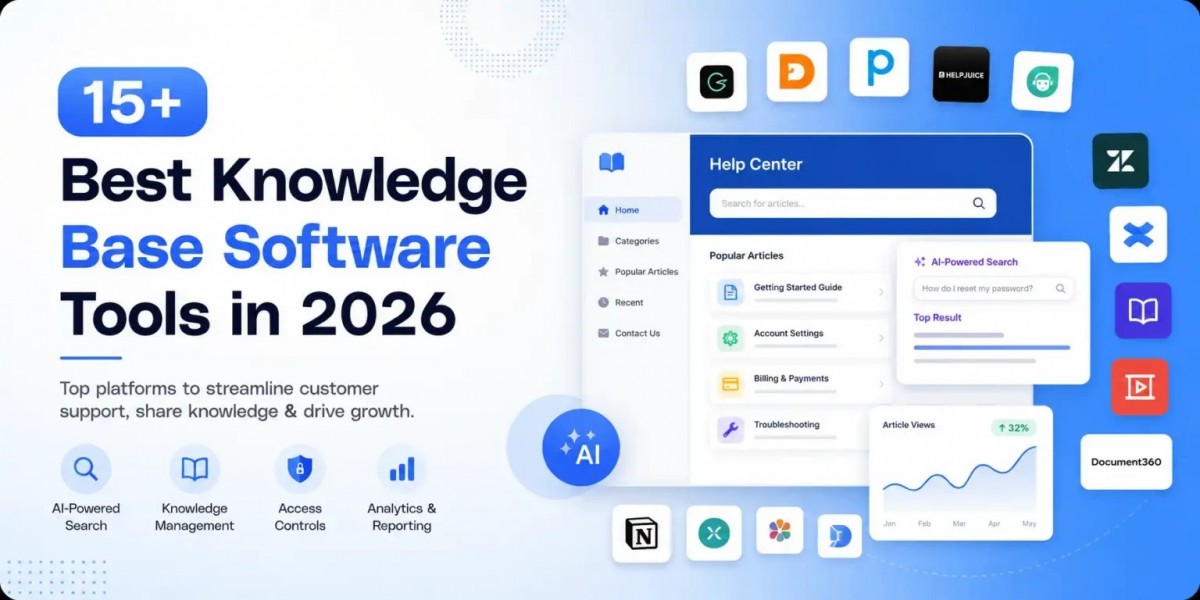
Knowledge Base Software is a centralized platform that allows organizations to collect, organize, and share information. It serves as a digital library where users can quickly access documentation, guides, FAQs, troubleshooting articles, and company knowledge.
Businesses use a Knowledge Base Platform to improve collaboration, reduce repetitive questions, and streamline information management across departments.
Common content stored in a Digital Knowledge Base includes:
- Company policies
- Training materials
- Product documentation
- Customer support articles
- Technical documentation
- Process workflows
- API documentation
- Employee onboarding resources
Why Businesses Need Knowledge Management Software
As companies grow, information becomes scattered across emails, documents, chat platforms, and spreadsheets. A centralized Knowledge Repository helps eliminate information silos and improves productivity.
Key benefits include:
Improved Knowledge Sharing
An effective Knowledge Management Platform encourages Knowledge Sharing across teams. Employees can quickly find answers without relying on colleagues for every question.
Faster Customer Support
A Customer Support Knowledge Base enables customers to solve problems independently through self-service resources.
Better Team Collaboration
Features like Collaborative Documentation, Internal Wiki, and Team Wiki help teams work together and maintain consistent documentation.
Reduced Training Time
An Employee Knowledge Base simplifies onboarding by providing new employees with instant access to company information.
Types of Knowledge Base Software
1. Internal Knowledge Base Software
An Internal Knowledge Base Software solution is designed for employees only. It contains company procedures, HR policies, project documentation, and internal workflows.
Benefits include:
- Faster onboarding
- Better collaboration
- Centralized information
- Improved productivity
2. External Knowledge Base Software
An External Knowledge Base Software platform is publicly accessible and helps customers find answers independently.
Examples include:
- Help centers
- FAQ portals
- Product guides
- Troubleshooting documentation
3. Enterprise Knowledge Base
Large organizations often require an Enterprise Knowledge Base with advanced permissions, security controls, and integrations.
Features typically include:
- Advanced Access Controls
- Enterprise-level security
- Multi-team collaboration
- Workflow automation
Essential Features of the Best Knowledge Base Software
When evaluating the Best Knowledge Base Software, businesses should consider the following features.
AI Powered Search
Modern AI Knowledge Base Software uses AI to understand user intent rather than relying solely on exact keyword matches.
Semantic Search
Semantic Search improves search accuracy by understanding context and meaning, helping users find relevant information even when using different wording.
Version Control
Version Control tracks changes and ensures users always access the latest content.
Access Controls
Strong Access Controls allow administrators to determine who can view, edit, or manage content.
Search Analytics
Search Analytics provides insights into what users search for and where content gaps exist.
Analytics and Reporting
Comprehensive Analytics and Reporting tools help organizations measure content effectiveness and user engagement.
The Role of AI in Modern Knowledge Management
Artificial intelligence is transforming the way organizations manage information.
Today's AI Knowledge Base Software often includes:
- Intelligent recommendations
- Automated content tagging
- Smart content categorization
- AI-generated summaries
- Natural language understanding
Many platforms also feature an integrated AI Assistant powered by Natural Language Processing that helps users find answers instantly.
Customer Self Service and Support Benefits
One of the biggest advantages of a Customer Support Knowledge Base is enabling Customer Self Service.
Instead of contacting support teams, customers can access:
- Product documentation
- Troubleshooting guides
- Frequently asked questions
- Setup instructions
- Training resources
A well-designed Help Center Software solution reduces support ticket volume while improving customer satisfaction.
Documentation and Knowledge Management
Modern organizations rely heavily on documentation to maintain consistency.
Popular documentation use cases include:
Technical Documentation Software
Technical Documentation Software helps companies create user manuals, installation guides, and technical resources.
Product Documentation
Comprehensive Product Documentation improves user adoption and reduces support requests.
API Documentation
For software companies, detailed API Documentation is essential for developers integrating with products and services.
Workflow Documentation
Clear Workflow Documentation helps employees follow standardized processes and maintain operational efficiency.
AI Documentation
Organizations increasingly use AI Documentation tools to generate, organize, and update content automatically.
Deployment Options
Different organizations require different deployment models.
Cloud Based Knowledge Base
A Cloud Based Knowledge Base provides flexibility, scalability, and remote accessibility.
SaaS Knowledge Base
A SaaS Knowledge Base offers subscription-based access without requiring extensive infrastructure management.
On Premises Knowledge Base
An On Premises Knowledge Base provides greater control over security and data storage.
Hybrid Knowledge Base
A Hybrid Knowledge Base combines cloud and on-premises capabilities to meet complex business requirements.
Knowledge Base Software vs Traditional Content Management Systems
While both systems manage content, a Knowledge Base Platform focuses on information discovery and accessibility.
Key differences include:
| Feature | Knowledge Base | Traditional CMS |
|---|---|---|
| Search Optimization | Yes | Limited |
| AI Search | Yes | Often Limited |
| Self-Service Support | Yes | No |
| Knowledge Sharing | Yes | Partial |
| Documentation Management | Yes | Limited |
Choosing the Right Solution
When selecting a Knowledge Management Platform, consider:
- Company size
- Security requirements
- Search capabilities
- AI features
- Integration options
- Scalability
- Collaboration tools
The ideal solution should support Enterprise Collaboration, efficient Information Management, and long-term business growth.
Conclusion
As businesses continue to generate more information, implementing effective Knowledge Base Software becomes increasingly important. Whether you need an Internal Knowledge Base Software solution for employees or an External Knowledge Base Software platform for customers, the right system can improve productivity, enhance collaboration, and reduce support costs.
Modern AI Knowledge Base Software combines advanced AI Search, Semantic Search, and intelligent automation to deliver a superior user experience. By investing in the Best Knowledge Base Software, organizations can create a centralized Knowledge Repository, improve Knowledge Sharing, and build a scalable foundation for future growth.


