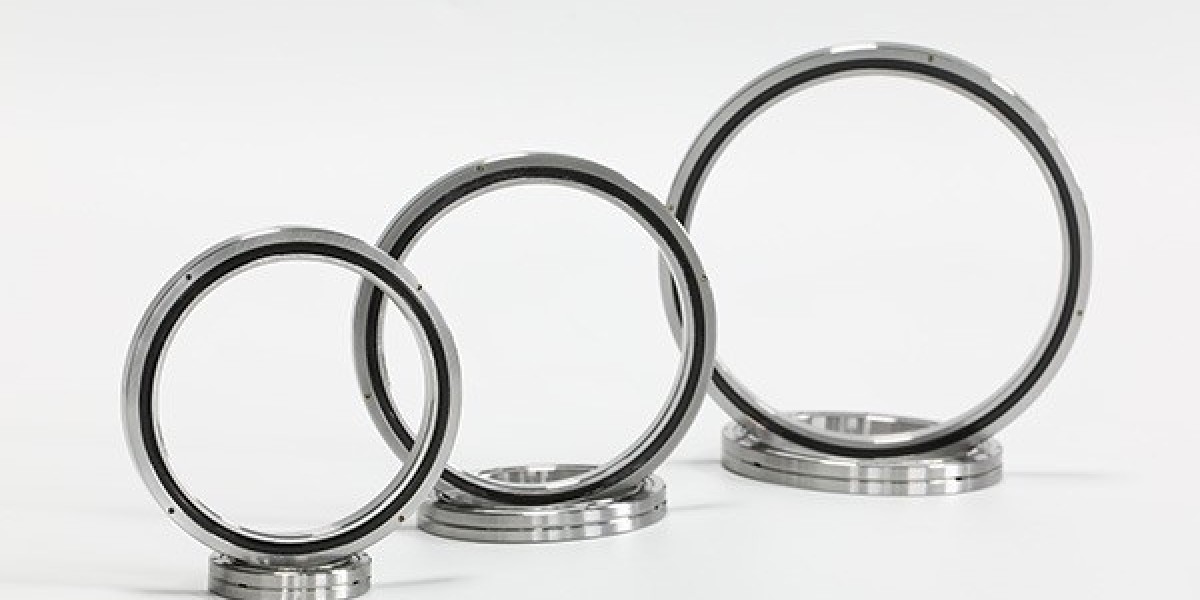

Compact industrial machines often struggle with vibration, positioning errors, and reduced rigidity during operation. When precision equipment lacks proper rotational support, production quality declines and maintenance costs increase. In many cases, poor machine performance is linked to selecting the wrong RA cross roller bearing for demanding applications.
Industries using robotics, medical devices, precision measuring tools, and automation systems require stable motion inside compact spaces. Standard bearings may fail to support multi-directional loads or maintain movement accuracy. This leads to system instability, downtime, and reduced manufacturing efficiency.
An RA cross roller bearing is specifically designed for compact precision machinery requiring rigidity, smooth rotation, and high load capacity. Understanding its benefits helps industries improve machine accuracy and operational reliability.
What Is an RA Cross Roller Bearing?
An RA cross roller bearing is a compact, lightweight bearing engineered with cylindrical rollers arranged alternately at right angles between inner and outer rings. This structure allows the bearing to support radial, axial, and moment loads simultaneously.
Unlike traditional bearings, the RA series is designed with a smaller cross-section, making it ideal for machinery where installation space is limited.
Common applications include:
- Industrial robotic systems
- Precision rotary tables
- Medical diagnostic equipment
- Semiconductor manufacturing machines
- Inspection and measurement systems
- Compact automation machinery
Its design improves rigidity without increasing machine size.
Common Problems Solved by RA Cross Roller Bearings
1. Lack of Rigidity in Compact Machines
Smaller machinery often experiences structural instability due to limited component space.
Poor rigidity may cause:
- Reduced machine precision
- Movement instability
- Faster component wear
- Lower production quality
An RA cross roller bearing improves stiffness while maintaining a compact footprint.
2. Precision Loss During Rotation
Precision equipment requires smooth and stable movement. Standard bearings sometimes create rotational inconsistencies, especially under multi-directional loads.
This problem affects industries such as:
- Robotics
- Optical equipment
- Semiconductor production
- Medical technology
Cross roller bearings improve rotational accuracy and repeatability.
3. Space Constraints in Equipment Design
Modern industrial equipment increasingly prioritizes compact engineering.
Traditional bearing systems may require:
- Additional support structures
- Larger mounting areas
- More installation space
RA series cross roller bearings solve this challenge with their slim-profile design.
Key Benefits of RA Cross Roller Bearings
Compact Design for Space Efficiency
One of the biggest advantages of an RA cross roller bearing is its compact structure.
Benefits include:
- Reduced equipment size
- Simplified installation
- Lightweight system integration
This helps manufacturers optimize machine layouts without sacrificing performance.
High Rotational Precision
Industries requiring precise motion benefit greatly from the bearing’s stable movement capability.
RA cross roller bearings provide:
- Low rotational resistance
- Smooth movement control
- Reduced vibration
- Improved positioning accuracy
Better motion consistency improves manufacturing output.
Multi-Directional Load Support
Unlike many standard bearings, RA cross roller bearings handle several load types simultaneously.
These include:
- Radial loads
- Axial loads
- Moment loads
This versatility improves performance in dynamic industrial applications.
Increased Equipment Durability
Reliable bearing performance reduces mechanical stress on machinery.
As a result, businesses experience:
- Longer service intervals
- Lower maintenance costs
- Reduced operational downtime
Durable components improve return on investment.
How to Choose the Right RA Cross Roller Bearing
Understand Machine Load Requirements
Before selecting a bearing, evaluate operational forces.
Key considerations include:
- Load direction
- Speed requirements
- Rotational accuracy needs
Correct bearing selection improves system performance.
Evaluate Installation Space
Compact machinery often has limited mounting areas.
The RA series is ideal for:
- Small robotic joints
- Compact automation systems
- Precision rotating mechanisms
Space-saving solutions improve design flexibility.
Focus on Environmental Conditions
Industrial environments influence bearing lifespan.
Consider:
- Operating temperatures
- Dust exposure
- Lubrication requirements
- Moisture conditions
Proper bearing protection extends service life.
Industries That Commonly Use RA Cross Roller Bearings
Robotics and Automation
Robotic systems depend on stable movement and compact mechanical design.
Medical Equipment
Diagnostic and surgical devices require high precision with minimal vibration.
Semiconductor Manufacturing
Precision chip manufacturing requires accurate positioning and rotational stability.
Optical and Measuring Systems
Inspection equipment depends on repeatable movement for reliable performance.
Best Practices to Maximize Bearing Lifespan
To improve performance and durability:
- Conduct regular maintenance checks
- Use appropriate lubrication methods
- Monitor vibration levels
- Ensure proper installation alignment
- Replace worn components early
Preventive maintenance reduces equipment failure risks.
Conclusion
Compact machinery requires reliable components capable of delivering precision, rigidity, and stability. An RA cross roller bearing helps solve common challenges such as vibration, positioning errors, and limited installation space in advanced industrial equipment.
Businesses investing in robotics, medical systems, and automation machinery benefit from improved movement accuracy and reduced maintenance costs. Proper bearing selection and preventive maintenance ensure consistent performance and long-term operational efficiency.


